

The Regeneration Divide: What Coventry’s £450m Shift Means for Local Space

Updated: Oct 21
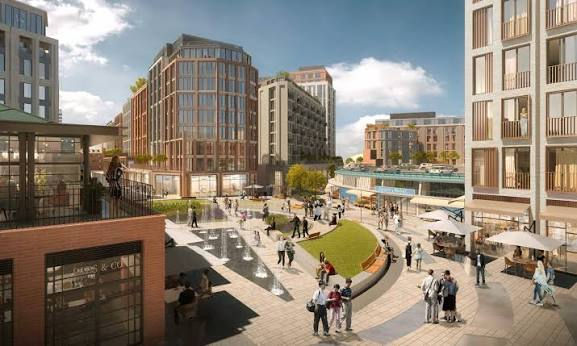
Look across the city centre this autumn, and the physical transformation of Coventry is no longer an artist’s impression on a planning board. It is steel, concrete, and perimeter hoarding.
Down along Rover Road, the clearance of older precinct retail blocks has paved the way for the first rising core of the £450 million City Centre South master plan. Steps away on The Burges, a newly confirmed £500,000 Heritage Revival Fund grant is breathing life into long-neglected medieval premises, converting timbered upper floors into permanent, affordable creative workshops.
Capital is moving into Coventry. Yet beneath the drone footage and developer press releases lies an uneasy question that echoes through every suburban high street, sports club, and household ledger from CV1 to CV6: who is this rapidly rising city actually being built for?
1. The Postcode Ledger: Where Average Wages Collide with Private Rent
On paper, Coventry remains one of the Midlands’ primary industrial and logistics powerhouses. Between advanced automotive engineering corridors, high-capacity distribution networks spreading across Ryton, and two internationally renowned universities, economic activity is continuous.
Yet for the typical local worker earning an average salary of £32,000 to £35,000, the arithmetic of everyday living has tightened into an acute squeeze.
Official analysis within Coventry City Council’s Homelessness and Rough Sleeping Strategy reveals a persistent, structural disparity: Local Housing Allowance (LHA) rates continue to fall significantly short of median private market rents across the city. When baseline housing allowances lag behind private market realities, the deficit doesn't simply disappear, it is absorbed directly out of food budgets, family utility buffers, and emergency savings.
The consequence is a divided geographic landscape:
The Earlsdon Price Wall (CV5): Traditional suburban corridors like Earlsdon and Styvechale have increasingly detached from local wage growth. Fueled by hybrid workers taking advantage of our 20-minute rail links to Birmingham and 60-minute Avanti connections to London Euston, starter terraced homes that were once accessible to junior nurses and tradespeople have climbed beyond reach.
The Central HMO Squeeze (CV1 & CV2): Across St Michael’s, Foleshill, and Lower Stoke, hundreds of traditional three-bedroom family terraces have been systematically converted into high-density Houses in Multiple Occupation (HMOs). While these conversions yield high cash returns for institutional landlords, they remove essential starter housing stock from the local market, stranding local 25-to-35-year-olds in perpetual flat-shares.
2. The 200-Home Benchmark: Social Rent vs. High-Density Living
The centerpiece of the city's modern reinvention is City Centre South. Delivered by The Hill Group in partnership with Legal & General, the development will eventually erect up to 991 homes alongside commercial pavilions, outdoor dining courts, and redesigned pedestrian avenues.
Crucially, the scheme designates 200 of those 991 units as genuinely affordable housing, with 145 earmarked for social rent and 55 for shared ownership, located directly beside our historic circular market.
This 200-home allocation represents a hard-won victory for civic planners who recognized that a residential city centre cannot simply become an enclave of build-to-rent commuter pods.
However, the wider reality is one of sheer absorption. Coventry’s Joint Strategic Needs Assessment (JSNA) citywide profile records that 7.7% of all households in the city, more than 10,190 homes, are officially overcrowded, living with fewer rooms than required for their family size. That figure sits noticeably higher than the West Midlands regional benchmark of 5.4% and the wider national average of 6.4%.
Two hundred affordable homes are an essential, welcome start. But set against a waiting list of thousands and an ongoing shortage of family-scale council dwellings, they highlight how steep the mountain remains.
3. The Burges Model: Preserving Civic Dignity on the Street
While City Centre South represents the high-density future, the restoration of The Burges offers an alternative vision for urban regeneration, one measured by texture, memory, and small-scale human dignity rather than towering glass facades.
Supported by Historic England and regional development frameworks, the newly awarded £500,000 grant will restore the historic frontages of 14th- and 15th-century buildings, adapting their interiors into subsidized workspaces for local artists, illustrators, and independent makers.
This project matters because it demonstrates that progress does not require erasing our architectural past. Coventry’s identity was never defined by sterile corporate retail chains; it was built by independent watchmakers, weavers, bicycle machinists, and car body fabricators. When we restore a medieval building to give a local creative practitioner an affordable door to trade from, we root modern commerce back into our living history.
4. What Must Happen Next?
A great city is not measured simply by how many construction cranes punctuate its skyline or how many corporate investment funds take an equity stake in its soil. True civic success is measured at street level:
Can a young person who grew up in Hillfields afford to rent an apartment in their own city?
Can an independent barista, baker, or retail clerk on Spon Street walk to work without spending half their paycheck on an uninsulated bedroom?
Can a growing family upgrade to a garden terrace without having to move out past the county line?
Coventry has rebuilt itself repeatedly across the centuries, from medieval cloth trade capital to post-war modernist pioneer. The city has never shied away from boldness. But as the concrete pours and the steel skeletons climb over Rover Road, our civic compass must stay fixed on one fundamental truth: regeneration is only genuine when it protects the people who kept the city alive during the lean years.
A skyline of cranes is an impressive visual statement. But a city that remains affordable, accessible, and generous to its own working workforce is the only legacy that truly endures.
Written by the Covlife Editorial Desk. Read more independent chronicles of our city's heritage, economy, and neighbourhoods at covlife.co.uk.


Comments